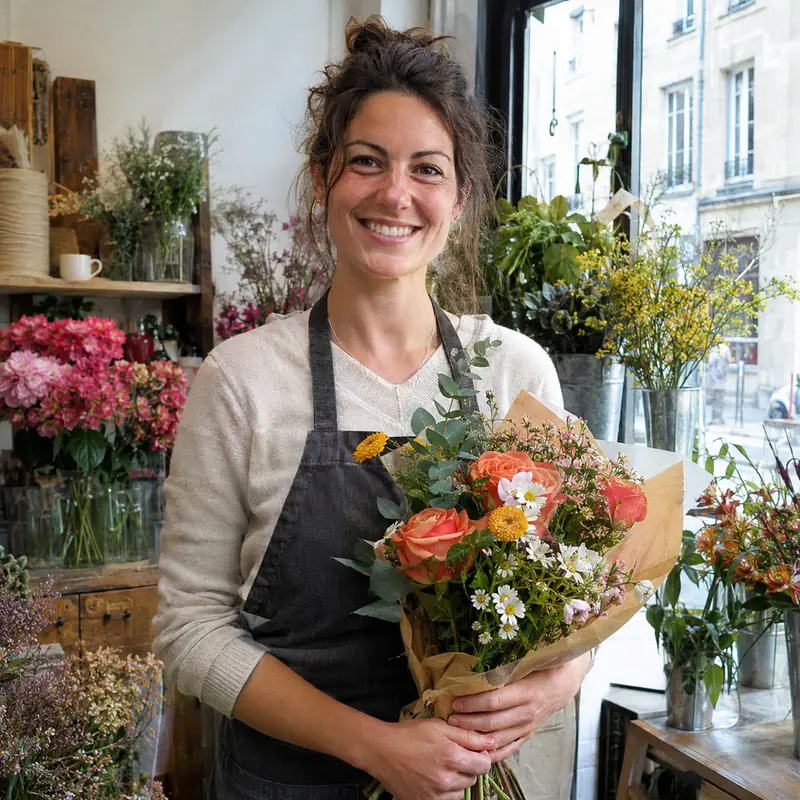
The shop and its florist
A former haberdashery, an oak workbench and flowers that haven’t travelled halfway round the world.
Clémence Aubrial
I learnt the trade as an apprentice at seventeen, then spent nine years working for other florists in Nancy and Metz. I learnt the skills, and also what I no longer wanted to do: unpack roses in January that had arrived by plane.
In 2019, the haberdashery at 24 rue des Glycines closed. I kept the wooden counter and the button drawers, painted the frontage green and filled the shop with buckets.
- 2019 the year the shop opened
- 3 in 4 flowers grown in Lorraine or elsewhere in France
- 6 places at the Saturday workshop
Where the name comes from
It comes from my grandmother’s garden near Lunéville. At the back was a bramble, or ronce, that no one ever managed to uproot. At the front, a bed of ranunculus, or renoncules, that she tended with care.
A good bouquet needs both: the wild and the carefully tended.
Clémence
How we work
Seasonal flowers, local first
Twice a week, I collect flowers from a grower in the Toulois and another in the Saintois. In winter, when Lorraine’s fields are resting, the anemones, ranunculus and mimosa come from the Var. For everything else, the origin is written on the bucket’s label.
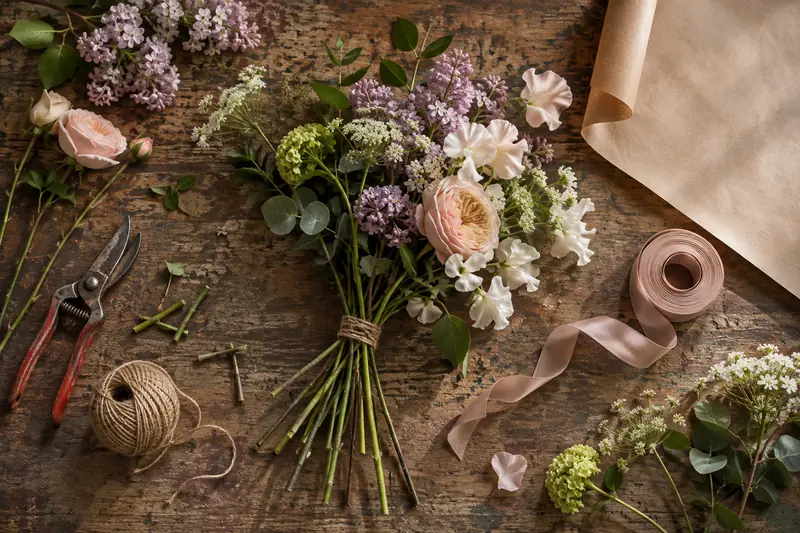
No unnecessary wrapping
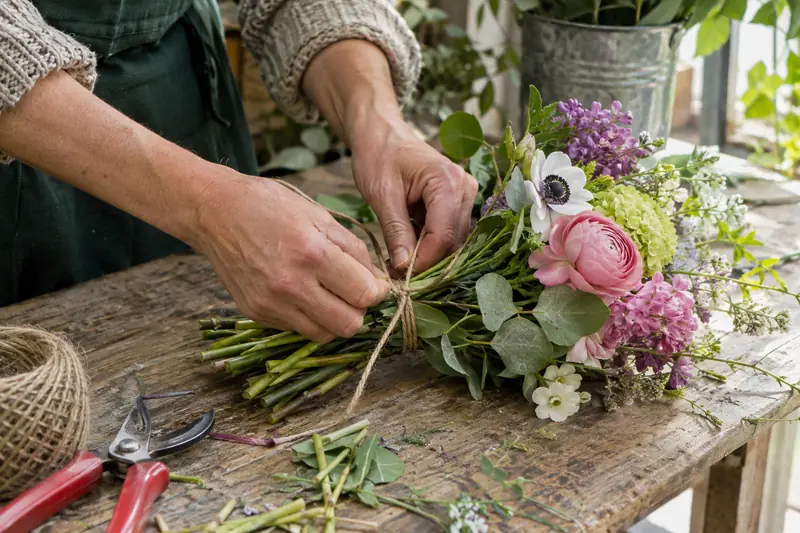
Bouquets leave wrapped in kraft paper and tied with raffia. We use no floral foam in arrangements and no plastic around the stems. For weddings and funeral flowers, we use wire mesh and water.
Let’s talk about the price
Tell us your budget when you come in. It makes things simpler for everyone. A 25 € bouquet gets the same care as an 80 € one.
Unsold flowers aren’t thrown away
The week’s flowers go upstairs to dry, hanging upside down. They become the shop’s dried bouquets.
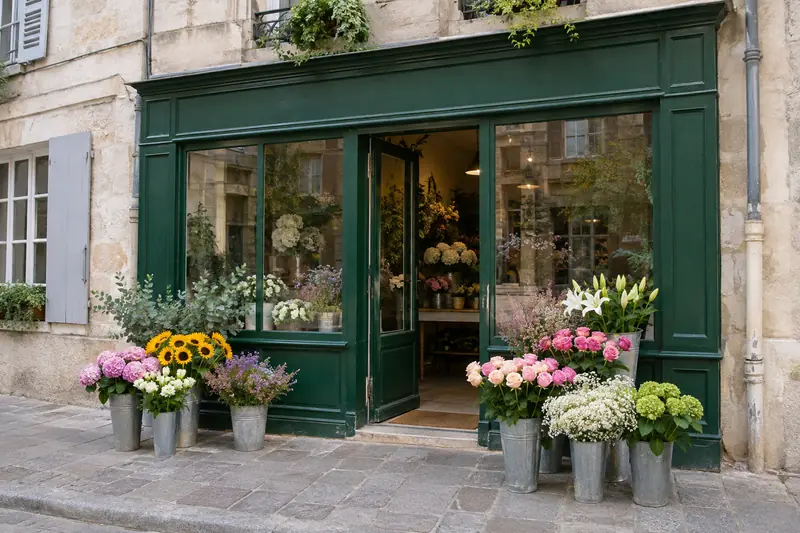
Look for the green door
24 rue des Glycines, Nancy. Come in even if you’re not buying. We like showing people what’s just arrived.